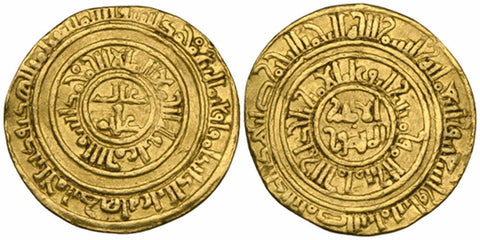


Beautiful 1422-1438 AD Egypt Islamic Gold Coin Ashrafi Mamluk Barsbay NGC AU 55
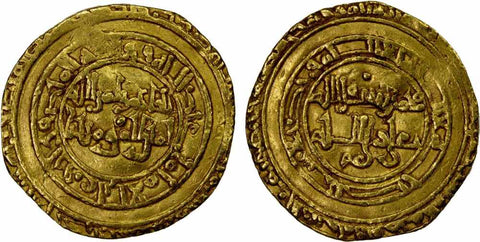
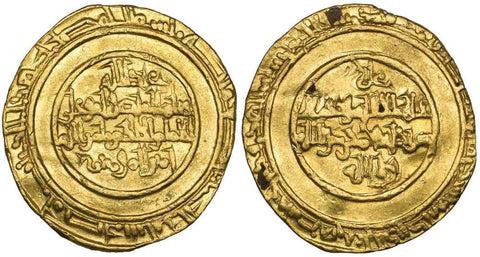
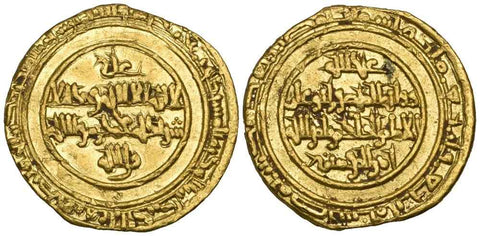
Description: A gold coin from Barsbay (Al-Ashraf Sayf al-Din Abu Al-Nasr), who ruled Egypt and Syria during the period 825-841 AH (1422-1438 AD). Barsbay is from the Circassian Burji Mamluk dynasty. The coin clearly does not show the mint name or the date of minting as is the norm with these small flan coins. The fact that neither the mint name nor the date of minting is evident on the coin is rather common since these small flan coins very seldom capable of accommodating the date and mint name. These coins (Ashrafis) were Barsbay's attempt to reform gold coinage in Egypt during medieval times in response to the Venetian Duct, which was becoming the standard in the Mediterranean basin at the time. The coin is graded AU 55 by NGC and comes in a plastic slab so labeled. Please carefully review the photos presented as they are part and parcel of our description.
Date: The date of minting is not evident on the coin and the coin is minted some time in the period 825-841 AH / 1422-1438 AD.
Mint: The coin does not show the minting location, but most likely al-Qahira or Cairo Egypt.
Size and weight: This is an Ashrafi, should weigh between 3.3 to 3.5 gram coin of high purity gold (over 22K). The coin is ~18 mm in diameter. The Ashrafi is a standard coinage minted after the Venetian ducats. This type of coin was established by Al-Ashraf Barsbay, who instituted monetary reform during his reign. As such this coin represents one of the earliest examples of the Ashrafi.
References: It is Album #998 and is similar to Balog #703 through 712 with both obverse and reverse divided by three horizontal cables facing left. The coin is listed in Lane Poole's Catalog of the Khedivial Collection as 1566-1568.
Condition: The coin is graded AU 55 by NGC and comes in a plastic slab so labeled. The coin itself is much better than the photos suggest with very well defined and legible calligraphy. It has sharp, very readable and distinct writing. The coin is problem free and is great looking, it is definitely a quality coin, very nice, and worthy of a spot in your collection.
Historic Perspective: The word Mamluks in Arabic means "owned", hence their nickname "Slave Kings". They succeeded the Ayyubids and ruled Egypt and Syria for about 250 years. They had been recruited by the Ayyubids and then, like the Turkish mercenaries of the Abbasid caliphs, had usurped power from their enfeebled masters. Unlike their predecessors, however, they were able to maintain their power, and they retained control of Egypt until the Ottoman conquest in 1517. Militarily formidable, they were also the first power to defeat the Mongols in open combat in 1260, at Ayn Jalut near Nazareth in Palestine.<p>The Mamluk sultans are usually divided into two dynasties, the Bahris (1250 - 1382 AD), chiefly Turks and Mongols, and the Burjis (1382 - 1517 AD), chiefly Circassians. These names arise from the location of the barracks of the Mamluks within the city of Cairo (Al Qahira). Those originating from the barracks on an island in the Nile are Bahari (sea dwellers) and those who were in the towers are the Burjis (the tower dwellers). The Bahri sultans were usually selected from a few chief families, but during Burji times there was scant respect for hereditary principle in the selection of rulers. Neither dynasty was able to exercise more than a limited power over the turbulent Mamluk soldiers. The sultans reigned, on average, less than seven years and usually met violent ends. In spite of the dangers that threatened the sultans at home, they usually conducted a vigorous foreign policy. They defeated the last of the Crusaders and repulsed the Mongol invasion of Syria. At times they held all Palestine and Syria and the holy places of Arabia. Even after the Ottomans occupied Egypt they wheeled quite a bit of power until Mohammad Ali massacred the last of them at the Cairo Citadel in the early 1800's.